
How Protective Packaging Reduces Transit Damage in Industrial Shipping
In today’s fast-moving industrial supply chain, products often travel long distances through multiple handling points before reaching their final destination. During transportation, goods are exposed to vibrations, shocks, compression, moisture, and rough handling. Without proper protection, these factors can lead to damaged products, increased replacement costs, delayed deliveries, and dissatisfied customers.
Protective packaging plays a critical role in preventing transit damage and ensuring products arrive safely and securely. From foam inserts to industrial packaging solutions, the right packaging system minimizes risk and improves overall shipping efficiency.
Understanding Transit Damage in Industrial Shipping
Transit damage occurs when products are impacted during storage, loading, transportation, or unloading. Industrial components, electronics, automotive parts, machinery, and fragile products are especially vulnerable during shipping.
Common causes of transit damage include:
- Impact and shock during handling
- Vibration from transportation vehicles
- Compression from stacking heavy loads
- Moisture and environmental exposure
- Improper packaging materials
- Movement inside packaging containers
Even minor damage can affect product performance, appearance, and customer trust, making protective packaging an essential part of industrial logistics.
Importance of Protective Packaging
Protective packaging acts as a safety barrier between the product and external forces during transportation. It helps absorb shocks, reduce movement, and maintain product stability throughout the shipping process.
Industries rely on protective packaging to:
- Prevent product breakage
- Reduce return and replacement costs
- Improve customer satisfaction
- Maintain product quality
- Enhance supply chain efficiency
- Support export and long-distance shipping
With increasing demand for safe and secure transportation, businesses are investing in high-quality packaging materials designed specifically for industrial applications.
Types of Protective Packaging Used in Industrial Shipping
Foam Packaging Solutions
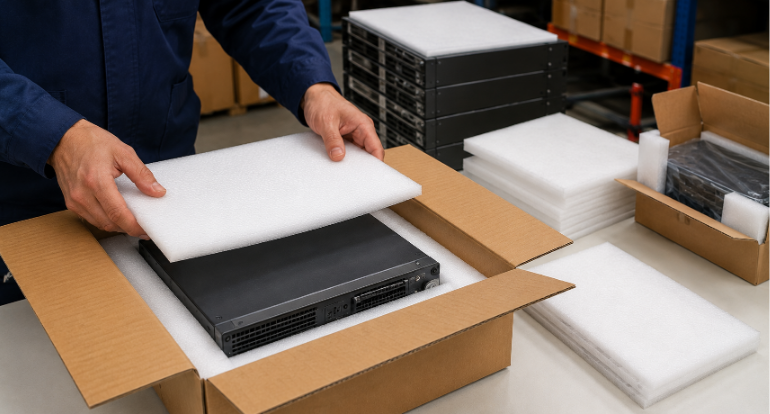
Foam packaging is widely used because of its excellent cushioning and shock absorption properties. Materials such as EPE foam, XLPE foam, and PU foam help protect sensitive and fragile products from impact damage.
Foam packaging is ideal for:
- Electronics
- Automotive components
- Medical equipment
- Precision tools
- Industrial machinery parts
Custom-cut foam inserts also prevent products from moving inside boxes during transit.
Corrugated Boxes
Corrugated boxes provide strong outer protection and are commonly used for industrial shipping. Their layered construction offers durability and resistance against compression.
Benefits include:
- Lightweight yet strong structure
- Easy handling and stacking
- Cost-effective shipping solution
- Suitable for bulk transportation
Wooden Pallets and Crates
Heavy industrial products often require wooden pallets and crates for safe handling and transportation. These packaging solutions offer structural support and improve load stability.
They are commonly used for:
- Machinery
- Heavy equipment
- Export packaging
- Bulk industrial goods
Bubble Wrap and Cushioning Materials
Bubble wraps and cushioning materials provide additional protection against scratches, impacts, and vibration. They are often combined with foam or corrugated packaging for enhanced safety.
How Protective Packaging Minimizes Transit Damage
Shock Absorption
Protective materials absorb sudden impacts during loading, unloading, and transportation. Foam inserts and cushioning materials reduce the force transferred to the product.
Vibration Control
Continuous vibration during shipping can loosen or damage products. Proper packaging stabilizes items and reduces internal movement, preventing wear and breakage.
Product Stability
Custom-designed packaging keeps products securely positioned inside the container. This prevents collisions between components during transit.
Moisture Protection
Certain packaging materials provide resistance against moisture, dust, and environmental exposure, protecting products during long-distance transportation and storage.
Load Distribution
Industrial packaging helps distribute weight evenly, reducing pressure points and minimizing the risk of crushing or deformation.
Benefits of Investing in Quality Protective Packaging
Businesses that invest in reliable packaging solutions experience several long-term advantages:
- Reduced product losses
- Lower shipping damage claims
- Improved operational efficiency
- Better brand reputation
- Safer product handling
- Increased customer confidence
Protective packaging is not just an added expense — it is a valuable investment that protects products and reduces overall business costs.
Choosing the Right Protective Packaging Partner
Selecting the right packaging manufacturer is important for ensuring product safety and packaging efficiency. Businesses should look for a supplier that offers:
- High-quality packaging materials
- Custom packaging solutions
- Export-grade packaging standards
- Bulk manufacturing capability
- Timely delivery
- Quality-tested products
An experienced packaging partner can help businesses identify the most effective packaging solution based on product type, weight, transportation method, and storage requirements.